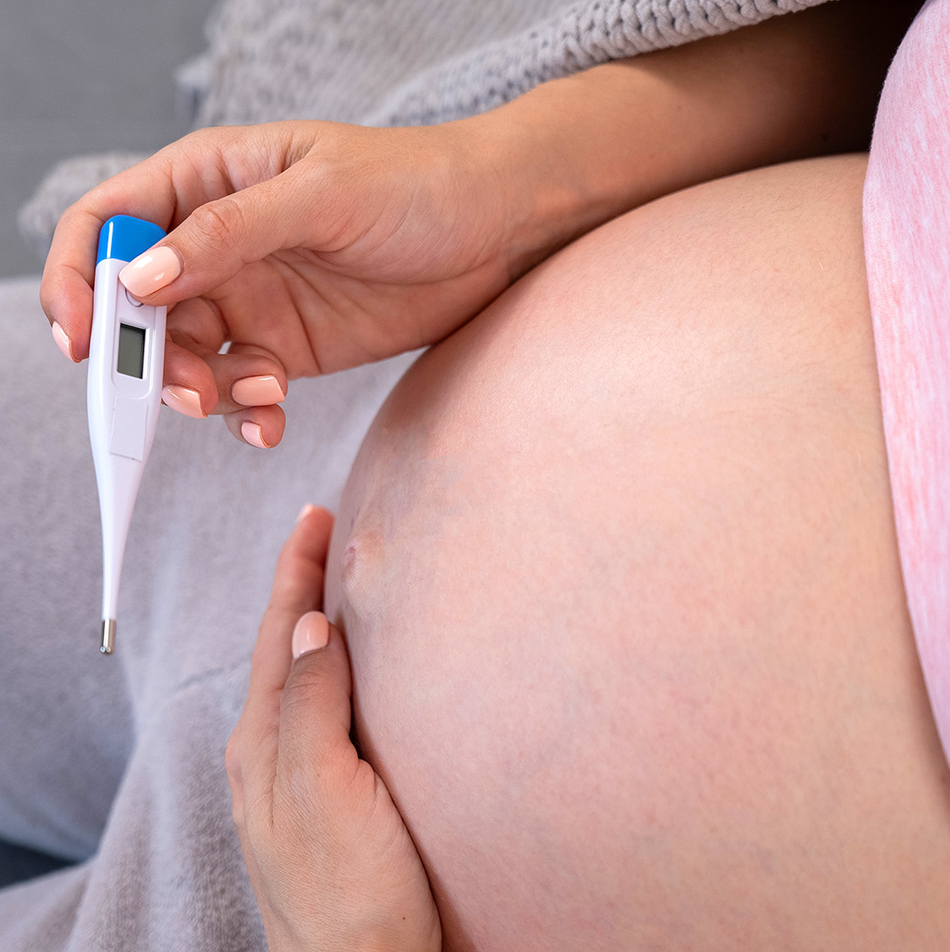
Fever is not an illness by itself — it’s a signal that your body is fighting something, usually an infection. However, during pregnancy, your body is already working overtime to support your baby. That’s why even a mild fever needs attention.
A fever is generally defined as a body temperature above 100°F (37.8°C). When the temperature rises too high — particularly during the first trimester, when your baby’s organs are developing — it can interfere with those early processes.
During this stage, the brain, spinal cord, and heart are forming. Research shows that a sustained high temperature during early pregnancy can slightly increase the risk of certain birth defects such as neural tube defects (like spina bifida), heart malformations, or intestinal issues.
This doesn’t mean every fever will cause problems — but it highlights why timely management matters.
Some infections that cause fever can also cross the placenta and directly affect the fetus. Examples include:
- Cytomegalovirus (CMV)
- Toxoplasmosis
- Herpes virus
- Zika virus
These infections may cause complications if untreated, which is why proper diagnosis and medical attention are important.
How Fever Can Affect the Fetus
Your baby’s development is sensitive to your internal environment. Let’s understand how a mother’s fever might impact the baby — and when it becomes risky.
- Effect of High Temperature (Hyperthermia)
When your body temperature rises above normal, it can interfere with the baby’s cellular growth. Scientists believe that high internal temperatures can disrupt how fetal cells divide and form new tissues.
During the first 6 weeks, when your baby’s neural tube (the structure that becomes the brain and spinal cord) is forming, even a temporary rise in temperature can affect normal closure and development.
- Immune Reaction and Inflammation
A fever triggers your immune system to release chemicals to fight infection. These inflammatory substances can sometimes cross the placenta. Although the baby is protected by several layers, strong inflammation in the mother can occasionally affect fetal brain development or trigger early contractions.
- Specific Complications Seen With Persistent High Fever
- Preterm labor – Fever, especially from infections like urinary tract infections or chorioamnionitis, can trigger premature contractions.
- Growth restriction – Some infections that cause fever can slow the baby’s growth.
- Low amniotic fluid – Severe infections or dehydration can reduce amniotic fluid levels.
- Miscarriage – While most mild fevers don’t cause miscarriage, prolonged untreated infections may raise the risk.
It’s important to remember — these are possibilities, not certainties. Many women experience short fevers during pregnancy and deliver completely healthy babies. The key lies in early action and medical care.
What To Do If You Develop a Fever During Pregnancy
Here’s your step-by-step guide on what to do if you ever find yourself with a fever while pregnant:
Step 1: Check Your Temperature Accurately
Use a digital thermometer and measure under your armpit.
- A mild fever: 99–100.4°F
- Moderate: 100.4–102°F
- High: above 102°F (38.9°C)
If your temperature is persistently above 101°F, or if you feel very weak, dizzy, or notice abdominal pain, call your doctor right away.
Step 2: Note Your Symptoms
Your doctor will want to know:
- When did the fever start?
- Are there other symptoms (cough, sore throat, burning urination, rash, vomiting)?
- Have you eaten or drunk enough water?
- Are you feeling the baby’s movements normally (if second or third trimester)?
Keeping a brief note of your symptoms helps your doctor identify possible causes.
Step 3: Rest and Hydrate
Fever causes your body to lose fluids quickly.
- Drink plenty of water, tender coconut water, or oral rehydration solution.
- Avoid caffeine or energy drinks.
- Get as much rest as possible — your body heals faster when it’s not under stress.
Step 4: Use a Cool Compress
Apply a damp towel to your forehead, armpits, or back of the neck to reduce body heat naturally. Take a lukewarm sponge bath — never use ice-cold water, as it can cause chills.
Step 5: Take a Safe Medicine (If Advised by Your Doctor)
The safest medicine to reduce fever during pregnancy is Paracetamol (Acetaminophen).
- Take 500 mg to 1000 mg every 6 hours if required (not exceeding 4 grams a day).
- It is widely considered safe throughout pregnancy when taken in the correct dose.
- Avoid self-medicating. Always confirm the dose with your obstetrician.
Avoid:
❌ Ibuprofen, Aspirin, or any NSAIDs — they can cause problems with the baby’s kidneys or the amniotic fluid, especially later in pregnancy.
❌ Herbal remedies or home tonics unless prescribed — some herbs may trigger contractions.
Step 6: Call or Visit Your Doctor
Even if your fever comes down after medication, inform your doctor. Sometimes, a simple viral infection can hide a bacterial cause like urinary infection or throat infection that needs antibiotics.
Your doctor might recommend:
- Blood tests (CBC, CRP)
- Urine analysis
- Ultrasound or fetal monitoring if required
- Safe antibiotics or antivirals, depending on the cause
Common Causes of Fever During Pregnancy
Let’s look at some common causes and what they mean for you and your baby:
Cause | How It Affects You | What It Means for Baby | Treatment |
Viral Infections (like cold, flu) | Cough, sore throat, mild body ache | Usually harmless if mild | Rest, hydration, paracetamol; antivirals if influenza confirmed |
Urinary Tract Infection (UTI) | Pain while urinating, frequent urination, fever | If untreated, can cause preterm labor | Urine test + pregnancy-safe antibiotics |
Throat or Ear Infection | Pain, fever, fatigue | Minimal risk if treated promptly | Antibiotics as prescribed |
Foodborne Infections (Listeria, Salmonella) | Nausea, vomiting, diarrhea, fever | May affect fetal growth or cause miscarriage if untreated | Immediate doctor visit, hydration, antibiotics |
Malaria, Dengue, Typhoid | High fever, body ache, weakness | Can cause low birth weight or early delivery | Hospital care and pregnancy-safe treatment |
Chorioamnionitis (infection of membranes) | High fever, abdominal pain, foul vaginal discharge | May lead to preterm labor | Requires IV antibiotics and hospital monitoring |
When To Seek Emergency Help
Call your doctor immediately or visit the hospital if you notice any of these red flags:
🚨 High fever above 102°F (38.9°C) that doesn’t come down
🚨 Severe abdominal or pelvic pain
🚨Burning or pain while urinating
🚨 Vaginal bleeding or watery discharge
🚨 Persistent vomiting or dehydration
🚨 Reduced baby movements
🚨 Severe headache, dizziness, or blurred vision
🚨 Difficulty breathing or chest pain
These could be signs of infection needing urgent attention.
Safe Ways to Bring Down a Fever Naturally
If your fever is mild, and your doctor confirms it’s nothing serious, try these safe home measures in addition to medication:
- Stay Cool – Keep the room well-ventilated and wear light clothing.
- Drink Fluids – Warm soups, fresh juices, or coconut water help regulate temperature.
- Rest – Sleep supports your immune system.
- Eat Light – Choose easy-to-digest meals like khichdi, curd rice, or fruit.
- Avoid Hot Baths or Saunas – They can raise core temperature further.
- Monitor Temperature – Check every 3–4 hours until normal.
How To Prevent Fever During Pregnancy
Prevention is always the best protection — especially when you’re pregnant. Here are simple but effective habits to keep infections (and fevers) away:
- Practice Hand Hygiene
Wash your hands with soap and water before eating and after using the restroom. Use sanitizer when outside.
- Avoid Close Contact with Sick People
If someone at home is ill with flu or cold, wear a mask and avoid sharing towels or utensils.
- Stay Updated on Vaccinations
Two important vaccines are recommended during pregnancy:
- Flu vaccine – can be taken in any trimester to protect both you and your baby.
- Tdap vaccine – given in the third trimester to protect against whooping cough.
Vaccines are safe in pregnancy and prevent serious infections that could lead to fever or complications.
- Eat Clean and Cooked Food
Avoid:
- Raw or undercooked meat, eggs, or seafood
- Unpasteurized milk or cheese
- Unwashed fruits and vegetables
Always wash and cook your food well to avoid infections like listeria or salmonella.
- Avoid Mosquito Bites
Use nets and repellents safe for pregnancy. Mosquito-borne diseases like dengue, malaria, and Zika can be dangerous for pregnant women.
- Stay Cool
Avoid long exposure to direct sunlight, hot tubs, or saunas. Overheating your body can also mimic fever effects.
Myths vs Facts About Fever in Pregnancy
Myth | Fact |
“A mild fever will harm my baby.” | A mild, short-lasting fever usually does not cause harm. The concern arises only with prolonged or high fever. |
“I can take any over-the-counter medicine to bring down fever.” | Many medicines are unsafe in pregnancy. Only take Paracetamol as prescribed. |
“Vaccines during pregnancy can cause fever and harm the baby.” | Vaccines like flu and Tdap are safe and protect both mother and baby. |
“Fever always means infection.” | Fever can also occur due to dehydration or heat, but infection is the most common cause. |
The Reassurance Every Mom-to-Be Needs
Let’s be real — getting a fever during pregnancy can feel terrifying. But remember: not all fevers are dangerous.
With proper rest, hydration, and medical supervision, most mothers recover completely and deliver healthy babies.
What matters most is:
- Don’t ignore the symptoms
- Don’t self-medicate
- Don’t delay contacting your doctor
Your body is working hard for two — listen to it, care for it, and act early when something feels off.