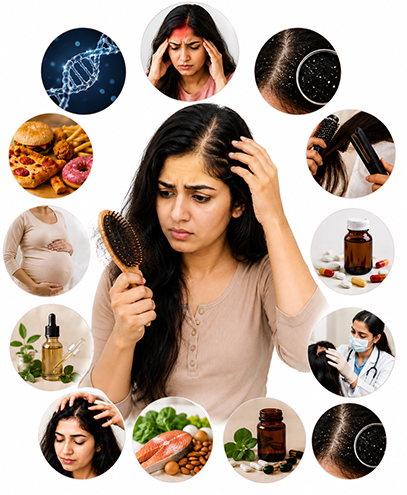
1. Genetic Hair Loss(Androgenetic Alopecia)
The most common cause of hair loss is hereditary hair loss, also known as male-pattern or female-pattern baldness.
In Men:
- Receding hairline
- Thinning at the crown
- Progressive baldness
In Women:
- Overall thinning
- Widening of the part line
- Reduced hair volume
Genetic hair loss usually develops gradually with age.
2.Stress and Emotional Trauma
Physical or emotional stress can trigger excessive hair shedding, known as telogen effluvium.
Common triggers include:
- Major surgery
- High fever
- Severe illness
- Emotional stress
- Sudden weight loss
- Divorce or grief
Hair loss caused by stress is often temporary, and hair may regrow once the stress resolves.
3.Nutritional Deficiencies
Healthy hair depends on adequate nutrients. Deficiencies in certain vitamins and minerals can lead to hair thinning.
Iron Deficiency
Low iron levels are one of the most common causes of hair loss, particularly in women.
Vitamin D Deficiency
Vitamin D plays a role in hair follicle function. Low levels may contribute to thinning hair.
Vitamin B12 Deficiency
Insufficient vitamin B12 can affect oxygen delivery to hair follicles.
Zinc Deficiency
Zinc is essential for hair tissue growth and repair.
Protein Deficiency
Hair is made primarily of protein. Inadequate protein intake may cause increased shedding.
4. Hormonal Changes
Hormones significantly influence hair growth.
Pregnancy and Childbirth
Many women experience postpartum hair loss within a few months after delivery.
Menopause
Declining estrogen levels during menopause can cause hair thinning.
Thyroid Disorders
Both hypothyroidism and hyperthyroidism may lead to hair loss.
Polycystic Ovary Syndrome (PCOS)
PCOS can cause hormonal imbalances that contribute to hair thinning in women.
5. Poor Hair Care Practices
Certain hairstyles and treatments can damage hair follicles.
Examples include:
- Tight ponytails
- Braids
- Chemical straightening
- Frequent coloring
- Excessive heat styling
- Harsh shampoos
Repeated stress on the hair can lead to traction alopecia, a form of hair loss caused by pulling on the hair.
6. Medical Conditions
Several diseases are associated with hair loss.
Alopecia Areata
An autoimmune disorder in which the immune system attacks hair follicles, causing round bald patches.
Scalp Infections
Fungal infections such as ringworm can lead to hair loss.
Diabetes
Poor circulation and hormonal changes may affect hair growth.
Lupus
This autoimmune condition may cause permanent hair loss due to inflammation.
Anemia
Low red blood cell levels can reduce oxygen delivery to hair follicles.
7. Medications
Certain medications may cause hair loss as a side effect.
These include:
- Chemotherapy drugs
- Blood thinners
- Antidepressants
- Blood pressure medications
- Acne medications
- Arthritis medications
Hair usually regrows after stopping the medication under medical supervision.
8. Rapid Weight Loss
Sudden weight loss or crash dieting can shock the body and interrupt the normal hair growth cycle.
This type of hair loss is often temporary and improves with proper nutrition.
Hair Loss in Men
Men commonly experience:
- Receding hairline
- Thinning crown
- Gradual baldness
Genetics and hormones are the leading causes.
Hair Loss in Women
Women often notice:
- Diffuse thinning
- Reduced hair volume
- Hair shedding after childbirth
- Widening part line
Hormonal changes, nutritional deficiencies, and stress are common contributors.
How Is Hair Loss Diagnosed?
A doctor may recommend:
Blood Tests
To check for:
- Iron deficiency
- Vitamin D levels
- Thyroid disorders
- Hormonal imbalances
- Vitamin B12 deficiency
Physical Examination
Examining the scalp and hair pattern helps determine the type of hair loss.
Hair Pull Test
This simple test evaluates excessive shedding.
Scalp Biopsy
In some cases, a small sample of scalp tissue may be examined.
Effective Treatments for Hair Loss
Treatment depends on the underlying cause.
- Improve Nutrition
A healthy diet supports hair growth.
Foods That Promote Healthy Hair
Eggs
Rich in protein and biotin.
Spinach
Contains iron and vitamin A.
Nuts and Seeds
Provide zinc and healthy fats.
Salmon
High in omega-3 fatty acids.
Lentils
Excellent source of iron and protein.
Greek Yogurt
Provides protein and vitamin B12.
- Manage Stress
Stress management techniques can help reduce excessive hair shedding.
Helpful strategies include:
- Yoga
- Meditation
- Regular exercise
- Adequate sleep
- Deep breathing exercises
- Medications
Minoxidil
Minoxidil is a commonly used treatment that helps stimulate hair growth in both men and women.
Finasteride
Prescribed mainly for men, this medication may slow hair loss and promote regrowth.
Always use medications under medical guidance.
- Hair Growth Supplements
Supplements containing:
- Biotin
- Iron
- Vitamin D
- Zinc
- Collagen
may be beneficial when deficiencies are present.
- Platelet-Rich Plasma (PRP) Therapy
PRP treatment involves injecting concentrated platelets into the scalp to stimulate hair follicles.
Many individuals with early hair thinning have shown improvement with this procedure.
- Hair Transplant Surgery
Hair transplantation is an option for people with advanced hair loss.
It involves moving healthy hair follicles from one area of the scalp to thinning areas.
Can Hair Loss Be Prevented?
Although genetic hair loss cannot always be prevented, these habits may help maintain healthy hair:
- Eat a balanced diet.
- Avoid crash diets.
- Manage stress effectively.
- Use gentle hair products.
- Limit excessive heat styling.
- Avoid tight hairstyles.
- Stay hydrated.
- Treat underlying medical conditions promptly.
When Should You See a Doctor?
Consult a healthcare professional if:
- Hair loss occurs suddenly.
- You notice bald patches.
- Hair thinning becomes severe.
- Hair loss is accompanied by itching or scalp redness.
- You experience fatigue or unexplained weight changes.
- Home remedies do not improve the condition.
Early diagnosis often leads to better treatment outcomes.
What Blood Tests Can Help Identify the Cause of Hair Loss?
Hair loss is often linked to underlying nutritional deficiencies, hormonal imbalances, or medical conditions. Your doctor may recommend certain blood tests to determine the exact cause and guide appropriate treatment.
- Complete Blood Count (CBC)
A CBC test helps detect:
- Anemia
- Infections
- General health problems that may contribute to hair loss
- Iron Studies (Serum Iron and Ferritin Test)
Low iron stores are one of the most common causes of hair loss, especially in women. These tests help identify:
- Iron deficiency anemia
- Low ferritin levels associated with excessive hair shedding
- Vitamin D Test
Vitamin D plays an important role in maintaining healthy hair follicles. Low vitamin D levels have been associated with:
- Hair thinning
- Increased hair shedding
- Alopecia areata
- Vitamin B12 Test
Vitamin B12 is essential for red blood cell production and oxygen delivery to hair follicles. Deficiency may lead to:
- Hair thinning
- Fatigue
- Weakness
- Thyroid Function Tests (TSH, T3, T4)
Both an underactive thyroid (hypothyroidism) and an overactive thyroid (hyperthyroidism) can cause hair loss. Thyroid tests help detect:
- Hormonal imbalances
- Metabolic disorders affecting hair growth
- Zinc Levels
Zinc is important for hair tissue growth and repair. Low zinc levels may contribute to:
- Hair loss
- Slow hair growth
- Brittle hair
- Hormonal Tests
Hormonal imbalances are a common cause of hair loss, particularly in women. Your doctor may recommend:
- Testosterone
- DHEAS (Dehydroepiandrosterone Sulfate)
- LH (Luteinizing Hormone)
- FSH (Follicle-Stimulating Hormone)
- Estrogen
- Progesterone
These tests are especially useful when evaluating hair loss related to:
- Polycystic Ovary Syndrome (PCOS)
- Menopause
- Irregular menstrual cycles
- Blood Sugar Test (HbA1c or Fasting Blood Sugar)
Diabetes and insulin resistance can affect blood circulation and hair growth. These tests help assess:
- Diabetes
- Prediabetes
- Metabolic health
- Autoimmune Screening Tests
If autoimmune conditions are suspected, your doctor may recommend:
- ANA (Antinuclear Antibody)
- ESR (Erythrocyte Sedimentation Rate)
- CRP (C-Reactive Protein)
These tests can help identify conditions such as lupus and other inflammatory diseases associated with hair loss.
- Protein and Nutritional Assessment
Tests for:
- Serum Protein
- Albumin
- Folate
can help detect nutritional deficiencies that may contribute to excessive hair shedding.
Common Blood Tests for Hair Loss at a Glance
Blood Test | Helps Detect |
CBC | Anemia, infections |
Ferritin & Iron Studies | Iron deficiency |
Vitamin D | Vitamin D deficiency |
Vitamin B12 | B12 deficiency |
TSH, T3, T4 | Thyroid disorders |
Zinc Levels | Zinc deficiency |
Hormonal Profile | PCOS and hormonal imbalance |
HbA1c/Fasting Blood Sugar | Diabetes and insulin resistance |
ANA, ESR, CRP | Autoimmune diseases |
Serum Protein and Folate | Nutritional deficiencies |