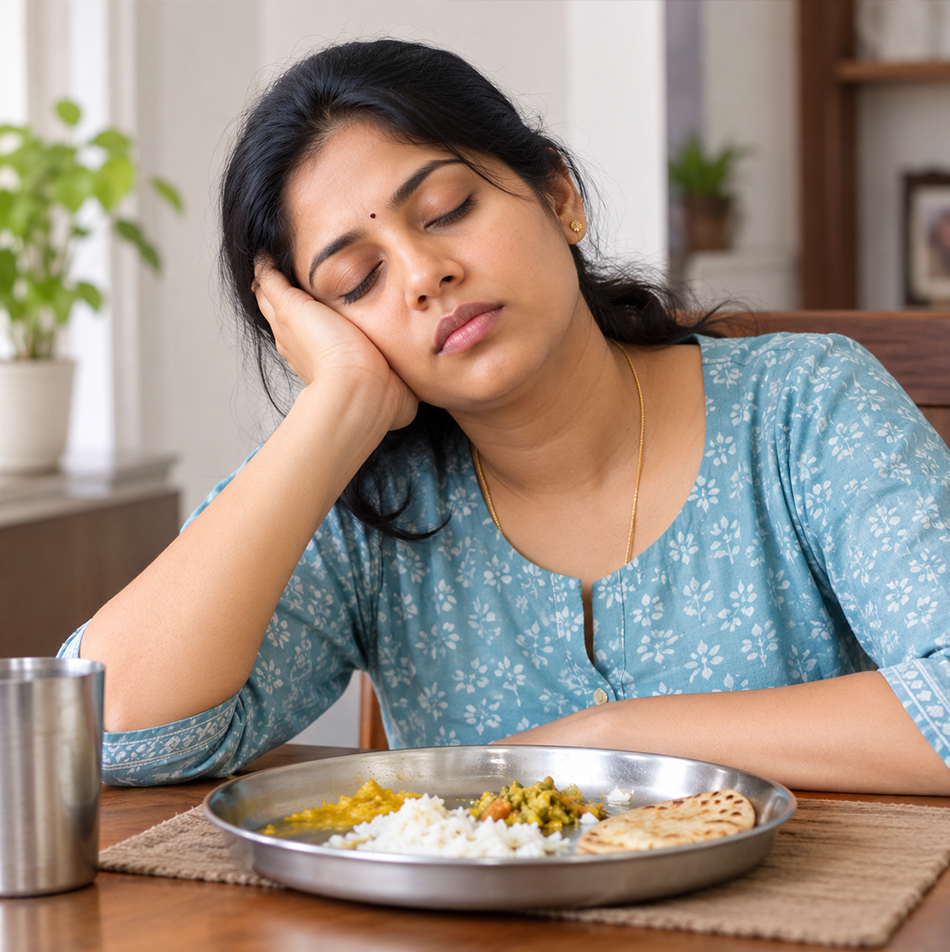
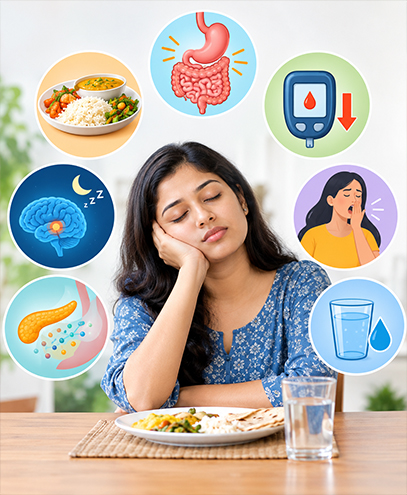
4. Your Meal May Contain Tryptophan-Rich Foods
Certain foods contain an amino acid called tryptophan. Your body uses tryptophan to make serotonin and melatonin, chemicals involved in mood and sleep regulation.
Foods containing tryptophan include:
- Eggs
- Milk and dairy products
- Poultry
- Fish
- Nuts and seeds
- Soy products
However, eating tryptophan-containing foods does not automatically make you sleepy. The overall composition and size of the meal, along with your sleep pattern and individual metabolism, also matter.
So if you feel sleepy after a meal, it is usually too simplistic to blame one particular food or nutrient.
5. You May Not Be Getting Enough Quality Sleep
Sometimes, the food isn’t the real problem.
If you regularly sleep too little at night, you may already be tired when mealtime arrives. After eating, your body’s natural tendency toward relaxation may make that underlying sleepiness much more noticeable.
Adults generally need around 7–9 hours of sleep per night, although individual needs can vary.
If you regularly experience:
- Daytime sleepiness
- Difficulty concentrating
- Irritability
- Low energy
- Frequent yawning
- Trouble staying awake
look at your sleep routine as well as your diet.
Maintaining a consistent sleep schedule, limiting excessive screen use before bed and creating a comfortable sleeping environment may help improve sleep quality.
6. Your Blood Sugar May Be Affecting Your Energy
Feeling tired after eating can sometimes be associated with blood glucose changes.
This is particularly important if post-meal sleepiness is frequent, severe or accompanied by other symptoms.
People with diabetes or impaired glucose regulation may experience unusual tiredness, especially when blood glucose levels are not well controlled.
Other symptoms that deserve attention include:
- Excessive thirst
- Frequent urination
- Unexplained weight changes
- Blurred vision
- Increased hunger
- Persistent fatigue
If you frequently experience these symptoms, consider discussing them with a healthcare professional. A doctor may recommend appropriate blood glucose testing based on your symptoms and risk factors.
7. An Underlying Health Condition Could Be Contributing
Occasional sleepiness after eating is usually normal. But persistent or excessive fatigue should not automatically be attributed to digestion.
Several health conditions can contribute to tiredness, including:
- Anaemia
- Thyroid disorders
- Diabetes
- Sleep disorders
- Vitamin deficiencies
- Certain infections
- Depression and other mental health conditions
- Medication side effects
For example, someone with an undiagnosed sleep disorder may feel tired throughout the day, including after meals.
If your tiredness is new, persistent, worsening or interfering with work and daily activities, speak with a healthcare professional.
Is Feeling Sleepy After Eating Normal?
Yes, mild sleepiness after a meal can be normal, especially after a large meal or when you are already tired.
The important thing is how often it happens and how severe it is.
If you occasionally feel relaxed and sleepy after lunch but otherwise have good energy and sleep well, it is usually not concerning.
However, if you regularly struggle to stay awake after meals, experience extreme fatigue or have other symptoms, it is worth investigating the possible cause.
How Can You Prevent Sleepiness After Eating?
You may be able to reduce post-meal sleepiness with a few simple lifestyle changes.
- Choose balanced meals
Include a combination of protein, fibre-rich carbohydrates, vegetables and healthy fats.
- Avoid overeating
Large meals can make you feel excessively full and sluggish.
- Reduce excessive added sugar
Limit sugary drinks, sweets and highly processed foods, especially during the workday.
- Stay hydrated
Dehydration can contribute to fatigue. Drink water regularly throughout the day.
- Take a short walk
A gentle 10–15 minute walk after eating may help you feel more alert and can also support healthy blood glucose levels.
- Prioritise good sleep
Adequate, consistent sleep can make a major difference to daytime energy.
- Pay attention to patterns
Keep track of what you eat and when sleepiness occurs. You may notice that certain meals consistently leave you more tired than others.
When Should You See a Doctor?
You should consider medical advice if your post-meal sleepiness is persistent, severe or accompanied by other symptoms.
Seek professional guidance if you experience:
- Extreme daytime sleepiness
- Fainting or dizziness
- Frequent excessive thirst or urination
- Unexplained weight loss or gain
- Persistent weakness
- Breathlessness
- Palpitations
- Blurred vision
- Significant changes in appetite
- Sleepiness that affects driving or work
A healthcare professional can evaluate your symptoms and determine whether further testing is appropriate.