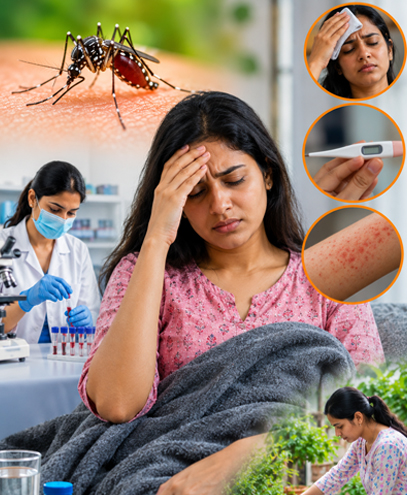
Common Symptoms of Dengue
Symptoms usually appear 4–10 days after a mosquito bite.
The most common dengue symptoms include:
- High fever (104°F or 40°C)
- Severe headache
- Pain behind the eyes
- Muscle pain
- Joint pain
- Body ache
- Extreme tiredness
- Nausea and vomiting
- Skin rash
- Mild bleeding from gums or nose
- Easy bruising
Many people describe dengue as “breakbone fever” because of the severe muscle and joint pain.
Warning Signs of Severe Dengue
Some patients may develop severe dengue, which requires immediate hospitalization.
Seek emergency medical attention if you notice:
- Severe abdominal pain
- Continuous vomiting
- Difficulty breathing
- Persistent bleeding
- Blood in vomit or stool
- Extreme weakness
- Cold and clammy skin
- Restlessness
- Reduced urine output
- Sudden drop in blood pressure
These warning signs usually appear when the fever begins to reduce, making them easy to overlook.
Who is at Higher Risk?
Anyone can get dengue, but some people are at greater risk of complications:
- Children
- Elderly individuals
- Pregnant women
- People with diabetes
- Patients with heart disease
- Individuals with weak immunity
- People previously infected with another dengue virus type
Early diagnosis is particularly important for these high-risk groups.
How is Dengue Diagnosed?
Doctors diagnose dengue based on symptoms, medical history, and laboratory investigations.
Common dengue blood tests include:
- Dengue NS1 Antigen Test
This is the most effective test during the first 1–5 days of fever.
It detects the dengue virus early before antibodies develop.
- Dengue IgM Antibody Test
Usually positive after 5–7 days of infection.
It indicates a recent dengue infection.
- Dengue IgG Antibody Test
Helps identify previous dengue infection.
- Complete Blood Count (CBC)
CBC is extremely important because it monitors:
- Platelet count
- White blood cell count
- Hematocrit levels
Doctors often repeat CBC every day to monitor disease progression.
Why Does Platelet Count Matter?
One of the biggest concerns in dengue is a falling platelet count.
Platelets help stop bleeding. In dengue, platelet levels may decrease significantly.
However, a low platelet count alone does not always mean severe dengue. Doctors evaluate platelet count together with symptoms, bleeding, hematocrit, and overall clinical condition before deciding treatment.
Avoid self-medicating based only on platelet numbers.
Treatment for Dengue
Currently, there is no specific antiviral medicine for dengue.
Treatment focuses on supportive care.
Doctors usually recommend:
- Plenty of fluids
- Oral rehydration solution (ORS)
- Adequate rest
- Paracetamol for fever (only as advised)
- Regular monitoring of platelet count
- Regular CBC tests
- Hospital admission if warning signs appear
Avoid painkillers like ibuprofen, aspirin, and diclofenac, as they may increase the risk of bleeding.
Always consult a qualified doctor before taking any medication.
Foods to Eat During Dengue Recovery
A healthy diet supports faster recovery.
Recommended foods include:
- Fresh fruits
- Coconut water
- ORS
- Vegetable soup
- Dal
- Rice
- Khichdi
- Fresh fruit juices
- Protein-rich foods
- Boiled vegetables
- Yogurt
Drink plenty of water throughout the day to prevent dehydration.
Foods to Avoid
Avoid:
- Oily foods
- Fried snacks
- Alcohol
- Excess sugar
- Carbonated drinks
- Very spicy foods
- Junk food
These foods may slow recovery or worsen dehydration.
How to Prevent Dengue
Prevention is the best protection.
Follow these simple tips:
- Remove stagnant water around your home.
- Cover water storage tanks.
- Clean coolers every week.
- Wear full-sleeved clothing.
- Use mosquito repellents.
- Install mosquito screens.
- Sleep under mosquito nets if needed.
- Keep surroundings clean.
- Change flower vase water regularly.
- Use larvicides where recommended.
Community participation is essential because mosquitoes breed quickly.
When Should You Visit a Doctor?
Visit a doctor immediately if:
- Fever lasts more than two days.
- You develop severe body pain.
- You notice bleeding.
- You experience continuous vomiting.
- You feel dizzy.
- Platelet count begins falling.
- Symptoms worsen after fever reduces.
Never ignore warning signs.
Importance of Early Dengue Testing
Many viral fevers resemble dengue in the beginning.
Early blood testing helps:
- Confirm infection
- Differentiate dengue from other illnesses
- Monitor platelet count
- Detect complications early
- Guide timely treatment
- Reduce hospitalization risk
- Improve recovery outcomes
Timely diagnosis can make a significant difference.
Why Choose add-on Scans & Labs?
When it comes to dengue testing, accuracy and speed matter.
At add-on Scans & Labs, we offer:
- Accurate dengue blood tests
- NS1 Antigen Testing
- Dengue IgM & IgG Testing
- Complete Blood Count (CBC)
- NABL-standard quality processes
- Experienced laboratory professionals
- Fast report delivery
- Affordable pricing
- Friendly patient care
- Convenient sample collection services (where available)
We are committed to helping patients receive timely and reliable diagnostic support.
Conclusion
Dengue is a preventable yet potentially serious illness. Recognizing the symptoms early, getting the right blood tests, staying hydrated, and following your doctor’s advice are the keys to a smooth recovery. Do not wait for symptoms to become severe. Early diagnosis can save lives and reduce complications.
Protect yourself and your family by preventing mosquito breeding and seeking medical care promptly if you develop a high fever or other symptoms suggestive of dengue.