

Waking up suddenly with a sharp, painful tightening in your calf or foot can be frustrating and uncomfortable. If you’ve ever wondered, “Why do my legs cramp at night?”, you’re not alone. Nighttime leg cramps are a common problem that affects people of all ages, especially older adults, pregnant women, and individuals with certain medical conditions.
These sudden muscle spasms can last from a few seconds to several minutes and may leave lingering soreness even after the cramp goes away. Understanding the causes, symptoms, and ways to prevent them can help you sleep better and improve your overall quality of life.
Night leg cramps, also called nocturnal leg cramps, are sudden, involuntary contractions of muscles that occur while sleeping or resting. They most commonly affect:
Unlike restless leg syndrome, which causes an urge to move the legs, night leg cramps involve intense muscle tightening and pain.
Nighttime leg cramps usually occur without warning. Common symptoms include:
Some people experience occasional cramps, while others may suffer from them several times a week.
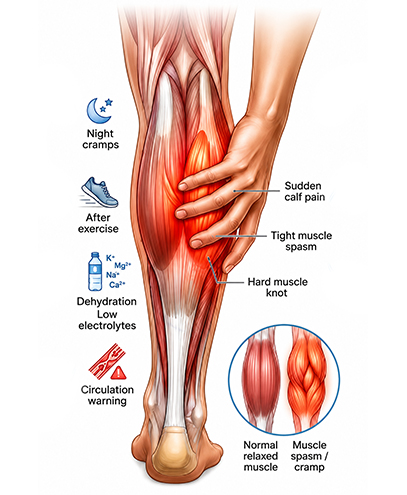
There are many possible reasons behind nighttime leg cramps. In many cases, the exact cause is unknown, but several factors are commonly linked to this condition.
1. Dehydration
Not drinking enough water can disrupt the balance of electrolytes in the body, making muscles more prone to cramping.
Signs of dehydration include:
Drinking adequate fluids throughout the day can help reduce the risk of cramps.
2.Mineral Deficiencies
Muscles need essential minerals to function properly. Low levels of certain nutrients may contribute to nighttime leg cramps.
Important minerals include:
Eating a balanced diet rich in fruits, vegetables, dairy products, nuts, and whole grains can help maintain healthy muscle function.
3. Prolonged Sitting or Standing
Remaining in one position for long periods can restrict blood flow and place stress on muscles. People who:
may experience leg cramps more often.
Regular stretching and movement during the day can improve circulation and reduce muscle tightness.
4.Overexertion and Exercise
Intense physical activity can cause muscle fatigue, increasing the likelihood of cramps during the night.
Common triggers include:
Stretching before and after exercise may help prevent muscle spasms.
5.Pregnancy
Night leg cramps are very common during pregnancy, particularly during the second and third trimesters.
Possible reasons include:
Although uncomfortable, these cramps are usually harmless and often disappear after delivery.
6.Aging
As people age, muscle mass naturally decreases, and muscles may become more susceptible to cramping.
Older adults are more likely to experience:
Regular physical activity and stretching can help maintain muscle health.
7.Poor Blood Circulation
Reduced blood flow to the legs can contribute to muscle pain and cramps.
Conditions affecting circulation include:
If cramps are accompanied by persistent pain, numbness, or swelling, medical evaluation is recommended.
8.Certain Medications
Some medications are associated with muscle cramps, including:
Never stop taking prescribed medications without consulting your doctor.
9.Underlying Medical Conditions
Frequent leg cramps may sometimes indicate an underlying health problem.
Conditions linked with nighttime leg cramps include:
Diabetes
High blood sugar can damage nerves and blood vessels, contributing to cramping.
Kidney Disease
Electrolyte imbalances caused by kidney disorders may trigger muscle spasms.
Thyroid Disorders
An underactive thyroid can affect muscle and nerve function.
Liver Disease
Certain liver conditions can alter the body’s chemical balance.
Neurological Disorders
Conditions affecting nerves and muscles may increase the risk of cramping.
Who Is Most at Risk?
Night leg cramps are more common among:
When a cramp strikes, these simple techniques can provide relief.
Stretch the Muscle
For calf cramps:
Stretching helps relax the muscle and shorten the duration of the cramp.
Massage the Area
Gentle massage increases blood flow and helps the muscle relax.
Use slow circular motions on the affected area until the pain eases.
Apply Heat
Warmth can loosen tight muscles.
Try:
Walk Around
Standing up and moving slowly may help restore normal muscle function.
Avoid sudden movements if the pain is severe.
Stay Hydrated
Drink water after the cramp, especially if dehydration or exercise may have contributed.
Although not all cramps can be prevented, certain lifestyle changes can reduce their frequency.
Drink Plenty of Water
Aim for adequate hydration throughout the day, especially during hot weather and after exercise.
Stretch Before Bed
Simple stretches for the calves and hamstrings before sleeping may significantly reduce nighttime cramps.
Exercise Regularly
Moderate exercise improves blood circulation and muscle strength.
Good options include:
Foods rich in magnesium, calcium, and potassium include:
Bananas
High in potassium.
Spinach
Rich in magnesium and calcium.
Yogurt
Excellent source of calcium.
Nuts and Seeds
Contain magnesium and healthy fats.
Sweet Potatoes
Provide potassium and other essential nutrients.
Wear Comfortable Footwear
Supportive shoes help reduce stress on muscles and improve alignment.
Avoid Sitting Too Long
Take short breaks every hour if your work involves prolonged sitting.
Stretching and walking improve circulation and muscle flexibility.
When Should You See a Doctor?
Occasional leg cramps are usually harmless. However, consult a healthcare provider if:
Persistent leg cramps may require evaluation to identify any underlying medical condition.
Most nighttime leg cramps are not dangerous. However, recurrent or severe cramps may occasionally signal:
Early diagnosis and treatment can help prevent complications and improve quality of life.
If you frequently experience leg cramps at night, certain blood tests can help identify underlying causes such as mineral deficiencies, dehydration, diabetes, thyroid problems, or kidney disease. Finding the root cause is important because persistent muscle cramps may sometimes indicate an underlying medical condition that requires treatment.
Electrolytes play a major role in muscle function. Low levels can trigger painful muscle cramps.
This test measures:
An imbalance in these minerals can interfere with normal muscle contraction and relaxation.
Diabetes can affect nerves and blood circulation, increasing the risk of nighttime leg cramps.
Common tests include:
These tests help determine whether high blood sugar levels are contributing to your symptoms.
Kidney disorders can lead to electrolyte imbalances and muscle cramps.
A Kidney Function Test evaluates:
Abnormal kidney function may increase the frequency of muscle spasms.
An underactive thyroid gland can affect muscles and nerves, causing cramps and muscle weakness.
The test usually includes:
Vitamin D deficiency is common and may contribute to muscle pain, weakness, and leg cramps.
Low vitamin D levels can also affect calcium absorption, which is essential for healthy muscle function.
Magnesium is essential for proper nerve and muscle activity. Deficiency can increase the likelihood of nighttime muscle cramps.
People who are pregnant, older adults, or those taking certain medications may be at higher risk of magnesium deficiency.
A CBC helps detect:
Poor oxygen delivery to muscles caused by anemia may contribute to muscle fatigue and cramping.
Certain liver disorders can alter the body’s chemical balance and lead to muscle cramps.
The test evaluates:
Deficiencies of iron or vitamin B12 may affect nerve and muscle health and contribute to leg cramps.
These tests include:
Consult your doctor if:
Night leg cramps are commonly caused by dehydration, muscle fatigue, prolonged sitting, pregnancy, mineral deficiencies, or certain medical conditions.
Low levels of magnesium, potassium, calcium, and sodium are commonly associated with muscle cramps.
Most leg cramps are harmless, but frequent or severe cramps may indicate underlying health problems that require medical attention.
Stretching the affected muscle, massaging the area, applying heat, and walking slowly can provide quick relief.
Hormonal changes, increased body weight, changes in circulation, and mineral imbalances contribute to leg cramps during pregnancy.
Yes. Inadequate fluid intake can disrupt electrolyte balance and increase the risk of muscle cramps.
Bananas, spinach, yogurt, nuts, seeds, sweet potatoes, and leafy green vegetables may help support healthy muscle function.
Yes. Diabetes can affect nerves and blood circulation, increasing the likelihood of muscle cramps.
Leg cramps become more common after the age of 50 because muscles naturally lose flexibility and mass with age.
You should seek medical attention if cramps are frequent, severe, associated with swelling or weakness, or interfere with your daily activities and sleep.
Night leg cramps are commonly caused by dehydration, muscle fatigue, prolonged sitting, pregnancy, mineral deficiencies, or certain medical conditions.
Low levels of magnesium, potassium, calcium, and sodium are commonly associated with muscle cramps.
Most leg cramps are harmless, but frequent or severe cramps may indicate underlying health problems that require medical attention.
Stretching the affected muscle, massaging the area, applying heat, and walking slowly can provide quick relief.
Hormonal changes, increased body weight, changes in circulation, and mineral imbalances contribute to leg cramps during pregnancy.
Yes. Inadequate fluid intake can disrupt electrolyte balance and increase the risk of muscle cramps.
Bananas, spinach, yogurt, nuts, seeds, sweet potatoes, and leafy green vegetables may help support healthy muscle function.
Yes. Diabetes can affect nerves and blood circulation, increasing the likelihood of muscle cramps.
Leg cramps become more common after the age of 50 because muscles naturally lose flexibility and mass with age.
You should seek medical attention if cramps are frequent, severe, associated with swelling or weakness, or interfere with your daily activities and sleep.
Please feel free to contact our friendly reception staff with any general or medical enquiry call us.
Need Blood Tests for Leg Cramps?
add-on Scans & Labs offers comprehensive blood tests to help identify the causes of muscle cramps and related health conditions.
📞 Call: 99008 11118
🏥 add-on Scans & Labs
✅ Accurate Reports
✅ Experienced Healthcare Team
✅ Comprehensive Health Packages
✅ Home Sample Collection Available
Early diagnosis can help you find relief and prevent complications.

Our experienced team and advanced technology ensure you receive top-quality care and accurate results. Schedule your visit now for a seamless, compassionate healthcare experience.
Your well-being is our priority.
For timely assistance, our customer care team is available to call back between 7.00 AM to 8.30 PM.
We add-on scans and labs strive to be the first choice in healthcare by providing high quality services to improve diagnostic services in health care.
To book a blood test, or an online blood collection or to enquire about our services,
call +91-9900811118 or visit our website