5. Children Are Frequently Exposed to Infections
Children often spend considerable time in classrooms, daycare centers, and playgrounds where they interact closely with other children.
They may also touch shared surfaces and frequently touch their eyes, nose, and mouth.
As a result, children can experience several respiratory infections during a year and may sometimes pass infections to other family members.
6. Dry Indoor Heating Can Irritate the Throat
In places where indoor heating is used, heated air can become dry.
Low humidity may contribute to a dry nose and throat, which can trigger irritation and coughing.
Drinking enough fluids and maintaining comfortable indoor humidity may help reduce dryness-related discomfort.
Is Cold Weather Itself Responsible for a Cold?
No. Cold weather itself does not directly cause the common cold.
The common cold is caused by viruses, with many different viruses capable of producing cold-like symptoms.
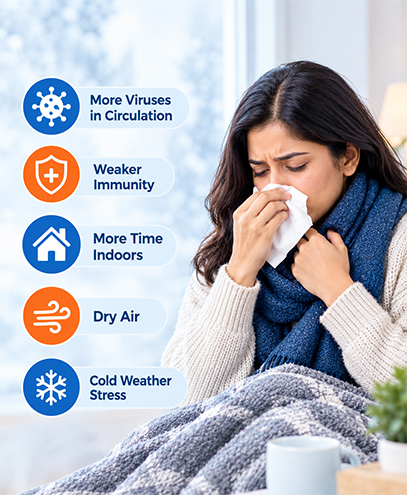
However, cold weather can indirectly increase the risk of infection by encouraging people to stay indoors, reducing ventilation, and creating environmental conditions that may favor respiratory virus transmission.
So, while going outside in cold weather does not automatically give you a cold, winter conditions can make respiratory infections more common.
Common Symptoms of Winter Colds and Coughs
Winter respiratory infections can cause symptoms such as:
- Runny or blocked nose
- Sneezing
- Sore throat
- Cough
- Mild fever
- Headache
- Body aches
- Tiredness
- Watery eyes
- Mucus or phlegm
Symptoms vary depending on the virus and the individual.
A cough can sometimes continue even after other cold symptoms have improved because the airways may remain irritated for some time.
How Can You Prevent Winter Colds and Coughs?
Although it is impossible to prevent every respiratory infection, several habits can reduce your risk.
Wash Your Hands Regularly
Wash your hands with soap and water, especially after returning from public places, before eating, and after coughing or sneezing.
If soap and water are unavailable, an appropriate alcohol-based hand sanitizer can be useful.
Avoid Touching Your Face
Try to avoid unnecessarily touching your eyes, nose, and mouth with unwashed hands.
These areas can provide entry points for infectious organisms.
Improve Indoor Ventilation
Whenever practical, allow fresh air to circulate indoors. Good ventilation is especially useful in crowded homes, offices, classrooms, and other enclosed environments.
Cover Coughs and Sneezes
Cover your mouth and nose when coughing or sneezing. Use a tissue or your elbow rather than your bare hands, and dispose of used tissues appropriately.
Stay Home When You Are Sick
If you have symptoms of a respiratory infection, staying home when possible can help reduce transmission to coworkers, classmates, friends, and family members.
Stay Hydrated
Adequate fluid intake can help prevent excessive dryness and support general health.
Warm fluids may also provide temporary relief from throat irritation and congestion.
Eat a Balanced Diet
A nutritious diet containing vegetables, fruits, whole grains, protein, and other nutrient-rich foods supports normal immune function.
There is no single food that can completely prevent a cold, but maintaining good nutrition is an important part of overall health.
Get Adequate Sleep
Poor sleep can affect your overall health and wellbeing. Aim for a consistent sleep routine and adequate rest, particularly when you are recovering from an infection.
When Should You See a Doctor for a Winter Cough?
Most common colds improve on their own. However, some symptoms should not be ignored.
Consider consulting a healthcare professional if you have:
- Difficulty breathing
- Chest pain
- Persistent or high fever
- Severe weakness or dehydration
- Cough that is getting worse instead of better
- Cough lasting for several weeks
- Blood in the sputum
- Severe wheezing
- Symptoms that improve and then suddenly become worse
Extra caution is important for young children, older adults, pregnant women, and people with underlying health conditions.
A persistent cough is not always caused by a simple cold. Allergies, asthma, sinus problems, acid reflux, and other conditions can also cause coughing.
Cold vs Flu: Are They the Same?
No. A common cold and influenza (flu) are different respiratory illnesses.
A cold often causes a runny or blocked nose, sneezing, sore throat, and cough. Flu may cause more sudden and significant symptoms such as fever, body aches, chills, fatigue, and cough.
Because symptoms can overlap, it may sometimes be difficult to identify the exact cause based on symptoms alone.
If symptoms are severe or concerning, medical evaluation may be appropriate.
Can Winter Allergies Cause Coughing?
Yes. Not every winter cough is caused by an infection.
Dust, indoor allergens, mold, and other triggers can contribute to allergic symptoms and coughing. Cold, dry air may also irritate sensitive airways.
If your cough repeatedly occurs in a particular environment or continues without typical infection symptoms, discussing the symptoms with a healthcare professional can help identify possible causes.
When Does a Winter Cough Need Diagnostic Evaluation?
Most winter colds and coughs are caused by viral infections and improve with time, rest, and supportive care. Not every cough or cold requires diagnostic testing.
But what if the cough does not go away? What if fever persists, symptoms keep coming back, or breathing becomes difficult?
This is when it becomes important to look beyond the symptom and understand what may be causing it.
A cough can occur due to a viral infection, bacterial infection, allergies, asthma, sinus problems, acid reflux, or other respiratory conditions. Since different conditions can cause similar symptoms, a healthcare professional may recommend diagnostic investigations when clinically appropriate.
From Symptoms to Diagnosis
Think of it this way:
Symptoms → Clinical Evaluation → Appropriate Investigation → Better Understanding of the Cause
The investigation recommended depends on the person’s symptoms, medical history, examination findings, age, and risk factors.
What Diagnostic Investigations May Be Considered?
🩸 Blood Investigations
When there is persistent fever, significant weakness, recurrent infections, or a suspected infection or inflammation, a doctor may recommend blood investigations such as:
Complete Blood Count (CBC)
C-Reactive Protein (CRP)
Other investigations depending on the clinical assessment
These tests can provide additional information about what may be happening in the body.
🦠 Respiratory Infection Testing
If a particular respiratory infection is suspected, the doctor may recommend an appropriate test to identify certain viral or bacterial infections.
Knowing the possible cause can help the healthcare professional decide on the appropriate next steps.
🫁 Chest Imaging
A persistent cough is not always just a prolonged cold.
If there is persistent fever, breathing difficulty, chest pain, worsening cough, or other concerning findings, a doctor may recommend a Chest X-ray or other appropriate imaging to evaluate the lungs.
🔬 Investigations for Other Causes
If the symptoms do not fit a typical infection, or if the cough keeps returning, the doctor may consider other possible causes such as:
Allergies
Asthma or airway conditions
Sinus-related problems
Acid reflux
Other respiratory conditions
The important point is that the right test depends on the suspected cause.
Not Every Cough Needs Every Test
Diagnostic testing is not about getting as many tests as possible.
It is about choosing the right investigation at the right time for the right clinical question.
A simple winter cough may improve without any testing. But when symptoms are persistent, severe, recurrent, or unusual, appropriate diagnostic evaluation can help provide more information about the underlying cause.
When Should You Seek Medical Evaluation?
Do not ignore a winter cough if you experience:
- Difficulty breathing
- Chest pain
- High or persistent fever
- Severe wheezing
- Blood in sputum
- A cough that is getting worse instead of better
- A cough that persists for several weeks
- Symptoms that improve and then suddenly worsen
- Recurrent respiratory infections
- Severe weakness or dehydration
In such situations, a healthcare professional can assess your symptoms and decide whether further investigations are needed.
Diagnosis Is the First Step Towards Understanding the Cause
A cough tells you that something is happening — but it does not always tell you why.
That is where clinical evaluation and, when required, diagnostic investigations can help.
From laboratory investigations to diagnostic imaging, the right diagnostic information can support healthcare professionals in understanding a patient’s condition and planning the next step in care.
At add-on Scans & Labs, we provide comprehensive diagnostic services for you and your family, bringing laboratory investigations and diagnostic imaging under one roof.
add-on Scans & Labs — Comprehensive Diagnostic Care for Your Entire Family, Under One Roof.
Precision | Care | Trust
📞 9900811118